Dental Practice · Periodontal & Surgical
Crown Lengthening
Surgical exposure of additional tooth structure for restorative or cosmetic reasons.
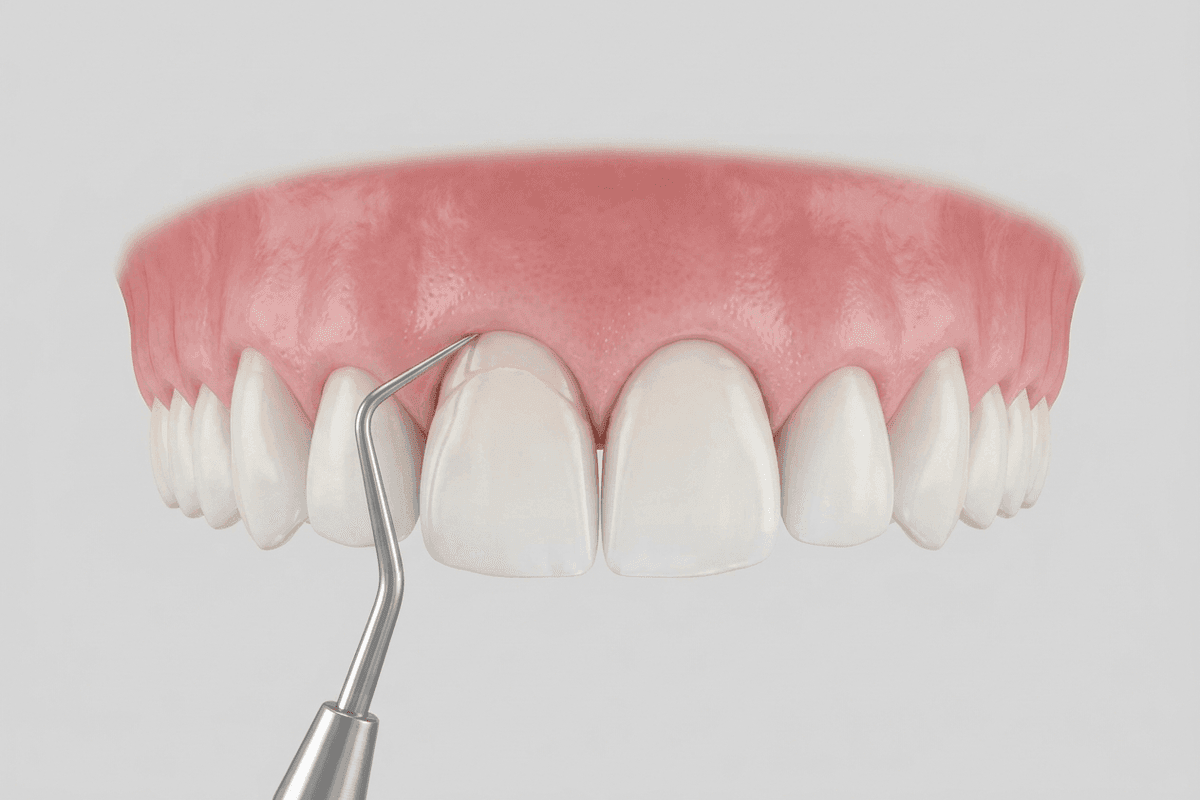
Crown lengthening creates access to tooth structure that the gum tissue and bone are covering — either because the tooth has broken at or below the gumline, or because the gumline itself sits too high to allow a restoration or veneer to be placed with proper margins. The restorative indication is more urgent. When a tooth breaks near or below the gumline, the remaining structure may be too short for a crown to grip. Attempting to place a crown without adequate tooth exposure above bone results in a restoration that violates the biologic width — the soft-tissue attachment zone the body maintains around every tooth. That violation causes chronic inflammation and progressive bone loss that undermines the restoration over time. Crown lengthening surgically repositions the gum and bone to expose the minimum tooth structure needed for a sound restoration, respecting the biologic boundary while saving a tooth that would otherwise need extraction. The cosmetic indication is different in severity but meaningful in impact. A smile that shows a disproportionate amount of gum tissue — sometimes called a "gummy smile" — often has teeth that are fully present beneath the tissue. Crown lengthening removes the excess and reveals the true proportion of the teeth, sometimes transforming the smile without any cosmetic restorative work at all.
Also in periodontal & surgical
Related services
Periodontal Treatment
Active treatment of gum disease — including laser-assisted therapy where indicated.
Gingivectomy
Soft-tissue contouring for periodontal pockets, hyperplasia, or cosmetic shaping.
Frenectomy
Release of restrictive frenum attachments: lip-tie, tongue-tie, or labial frenum.
Alveoloplasty
Surgical smoothing and reshaping of the bony ridge after extractions.