Dental Practice · Endodontics
Root Canal Retreatment
Re-entry of a previously root-canalled tooth to address residual infection or technical issues.
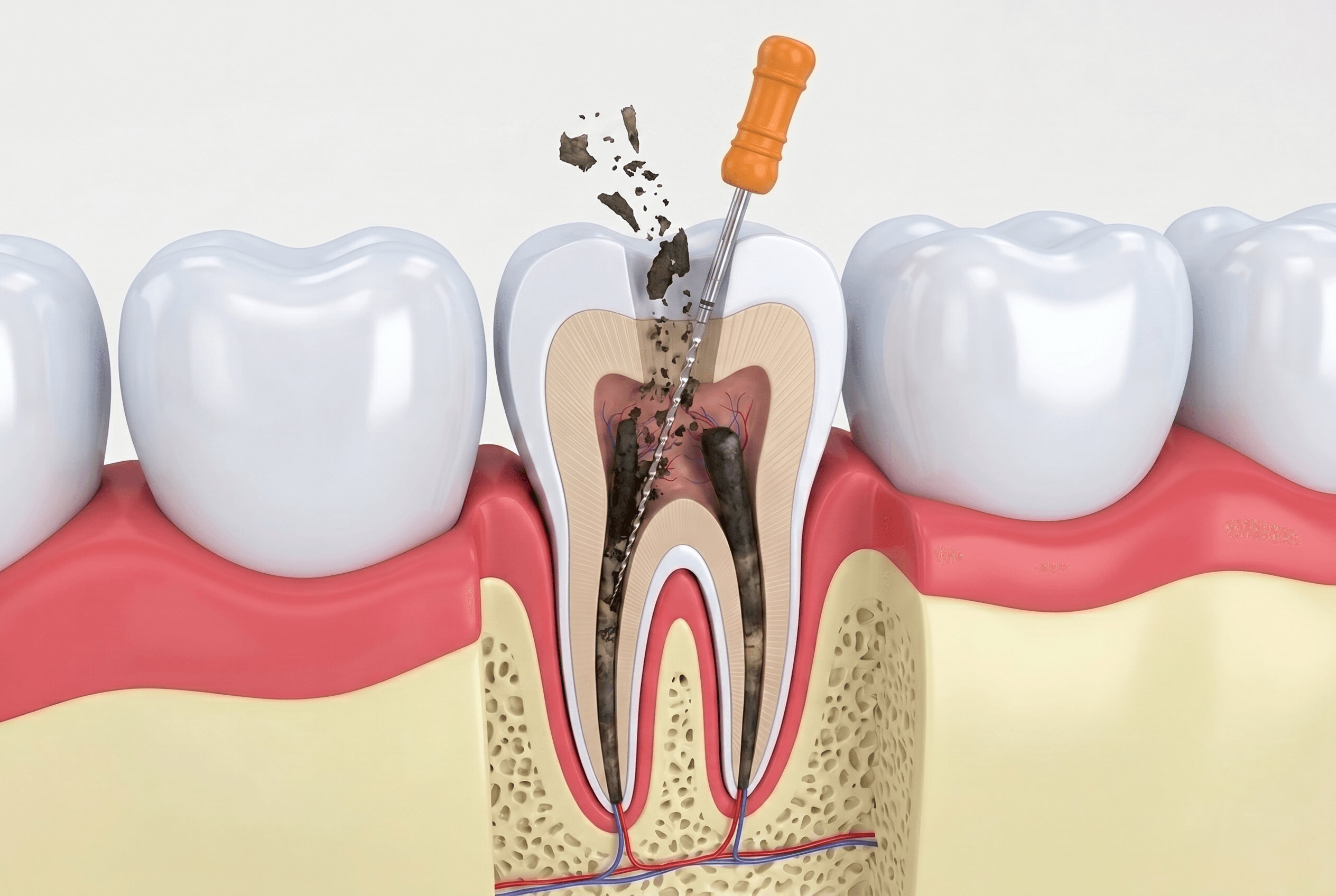
A tooth that was successfully root-canalled years ago can develop new problems. The seal at the filling material may have broken down over time, allowing bacteria to re-enter. The original treatment may have missed a canal, particularly in multi-rooted teeth where the anatomy can be complex. A crack may have formed. Or new decay may have progressed far enough to compromise the integrity of the existing treatment. In all these situations, the tooth is not lost, but it needs to be treated again. Root canal retreatment re-enters the tooth through the crown, removes the prior filling material, re-cleans and re-shapes the canal system, and re-seals it. This is technically more demanding than an initial root canal: the existing gutta-percha must be dissolved or mechanically removed, posts may need to be taken out, and calcified canals that were challenging the first time must be navigated again. Before recommending retreatment, we evaluate the tooth carefully: the existing crown or restoration, the quality of the original treatment, the bone levels around the root, and whether there are signs of fracture that would make the tooth unrestorable regardless of the endodontic outcome. Retreatment is the right choice when the tooth is structurally sound and the source of the problem is addressable through the canal. If retreatment is not viable because of fracture, anatomy, or the condition of the surrounding bone, we discuss the surgical alternative (apicoectomy) or, when the tooth genuinely cannot be saved, the extraction-and-replacement pathway.