Medical Practice · Oral Medicine & Pathology
Biopsies
Soft-tissue and oral lesion biopsies, performed in-office with pathology turnaround in days.
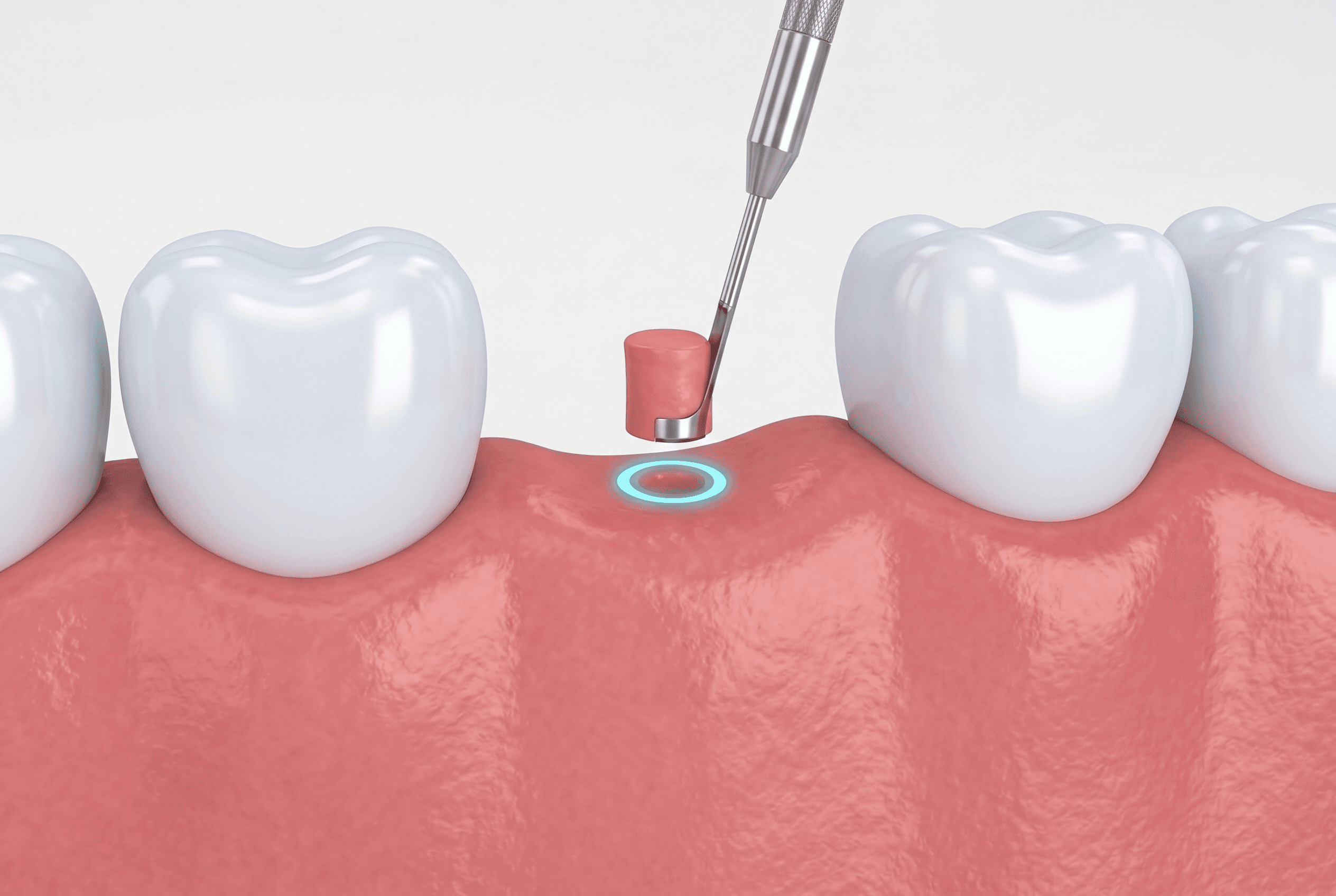
Oral lesions are a general term we use to describe any abnormal area in the mouth. This can include changes in the tissue of the gums, tongue, cheeks, lips, or roof of the mouth. These changes can look or feel different from normal tissue and may appear as: • Sores or ulcers that do not heal • White or red patches • Thickened or rough areas • Bumps, lumps, or growths • Areas of irritation, bleeding, or discoloration Oral lesions can happen for many reasons, including irritation (like biting or rubbing), infections (viral, bacterial, or fungal), immune-related conditions, medication effects, or in some cases, precancerous or cancerous changes. Due to this wide range of causes, it's important to properly evaluate any lesion that does not heal within 10–14 days. Evaluation may include a clinical exam, monitoring over time, and sometimes a biopsy. An oral biopsy is a small, routine procedure where we take a tiny sample of tissue from an area in the mouth so it can be examined under a microscope. The purpose is to find out exactly what the tissue change is, especially when something does not look normal or does not heal as expected. We recommend a biopsy when there is a lesion, sore, or area of concern that: • Has not healed within about 10–14 days • Looks unusual in color, texture, or shape • Is growing or changing over time • Cannot be clearly identified on exam During the procedure, the area is numbed with local anesthetic, so the patient stays comfortable. A small piece of tissue is then carefully removed. In most cases, stitches are placed to help the area heal. The sample is sent to a board-certified laboratory, where a pathologist examines it to determine the exact diagnosis. After the biopsy, patients may have mild soreness, swelling, or minor bleeding for a short period of time. Healing typically occurs within 3–5 business days of treatment if any is needed. What sets us apart? When it comes to oral lesions, we take them very seriously, and we make sure that all care within our scope can be done under our roof. No referrals to separate facilities, no scheduling delays across multiple practices, no gap between the clinician who found the lesion and the one who explains the results. We review the report with you directly: the findings, what they mean, and the treatment plan that follows. If the results warrant referrals to other specialties or further treatment, we coordinate and adapt to the change immediately and stay involved in your care. We know results can be scary, which is why we will be here with you every step of the way. You will never be handed a report and left to interpret it alone. Often we will also educate patients on the possible causes of their lesions and help guide them on methods to reduce or even avoid re-occurrence.
Also in oral medicine & pathology
Related services
Oral Pathology
Diagnosis and biopsy of oral lesions — both routine and concerning.
Oral Cancer Screening
Visual and tactile examination for soft-tissue lesions and early signs of oral malignancy.
Custom Radiation Shields
Custom oral radiation shields and positioning stents that protect healthy tissue during head and neck radiation therapy.
Osteonecrosis
Less-invasive evaluation and management of osteonecrosis of the jaw (dead jaw bone), often linked to certain medications or prior radiation.