Medical Practice · Oral Medicine & Pathology
Oral Cancer Screening
Visual and tactile examination for soft-tissue lesions and early signs of oral malignancy.
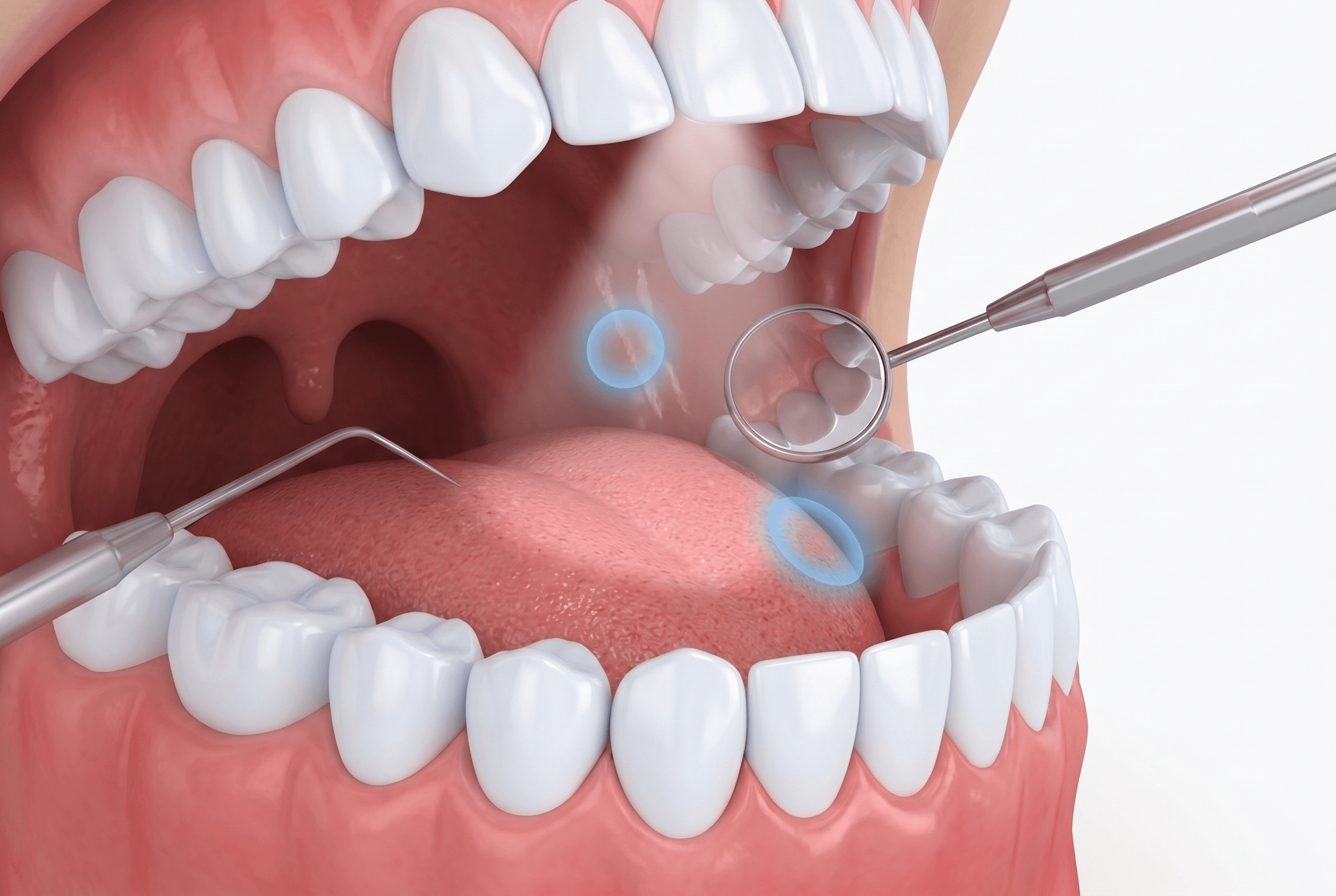
Oral cancer is among the most survivable cancers when caught early, and among the most deadly when caught late. The difference almost always comes down to whether someone was looking. We screen every patient at every hygiene visit, because the lesion that will matter most to you may be the one you would never notice on your own. The screening is a visual and tactile examination: lips, labial mucosa, buccal mucosa, gingiva, hard and soft palate, floor of the mouth, lateral and ventral tongue, oropharynx. We check for lesions, unusual color changes (red, white, or speckled), tissue thickening, ulcerations that have not healed, and asymmetry. It adds five minutes to the visit and is included in the cost of your cleaning. When something warrants a closer look, we document it, photograph it, and discuss it with you honestly. Some findings are clearly benign and need only monitoring. Some are indeterminate and get a follow-up appointment in two to four weeks to see if they resolve on their own. Many inflammatory lesions do. Findings that do not resolve, or that present with characteristics associated with malignancy, are biopsied in our office without delay. Risk factors worth knowing about: tobacco and alcohol use remain the primary risk factors, but HPV-associated oropharyngeal cancers are increasing substantially in non-smokers. Age is a factor; so is chronic sun exposure to the lips. None of these are required for a cancer to develop, which is why we screen everyone. You should not need to ask for this screening. We perform it automatically.
Also in oral medicine & pathology
Related services
Oral Pathology
Diagnosis and biopsy of oral lesions — both routine and concerning.
Biopsies
Soft-tissue and oral lesion biopsies, performed in-office with pathology turnaround in days.
Custom Radiation Shields
Custom oral radiation shields and positioning stents that protect healthy tissue during head and neck radiation therapy.
Osteonecrosis
Less-invasive evaluation and management of osteonecrosis of the jaw (dead jaw bone), often linked to certain medications or prior radiation.