Dental Practice · Restorative Dentistry
Teeth Whitening
In-office and at-home whitening, including deep-bleaching for stubborn cases.
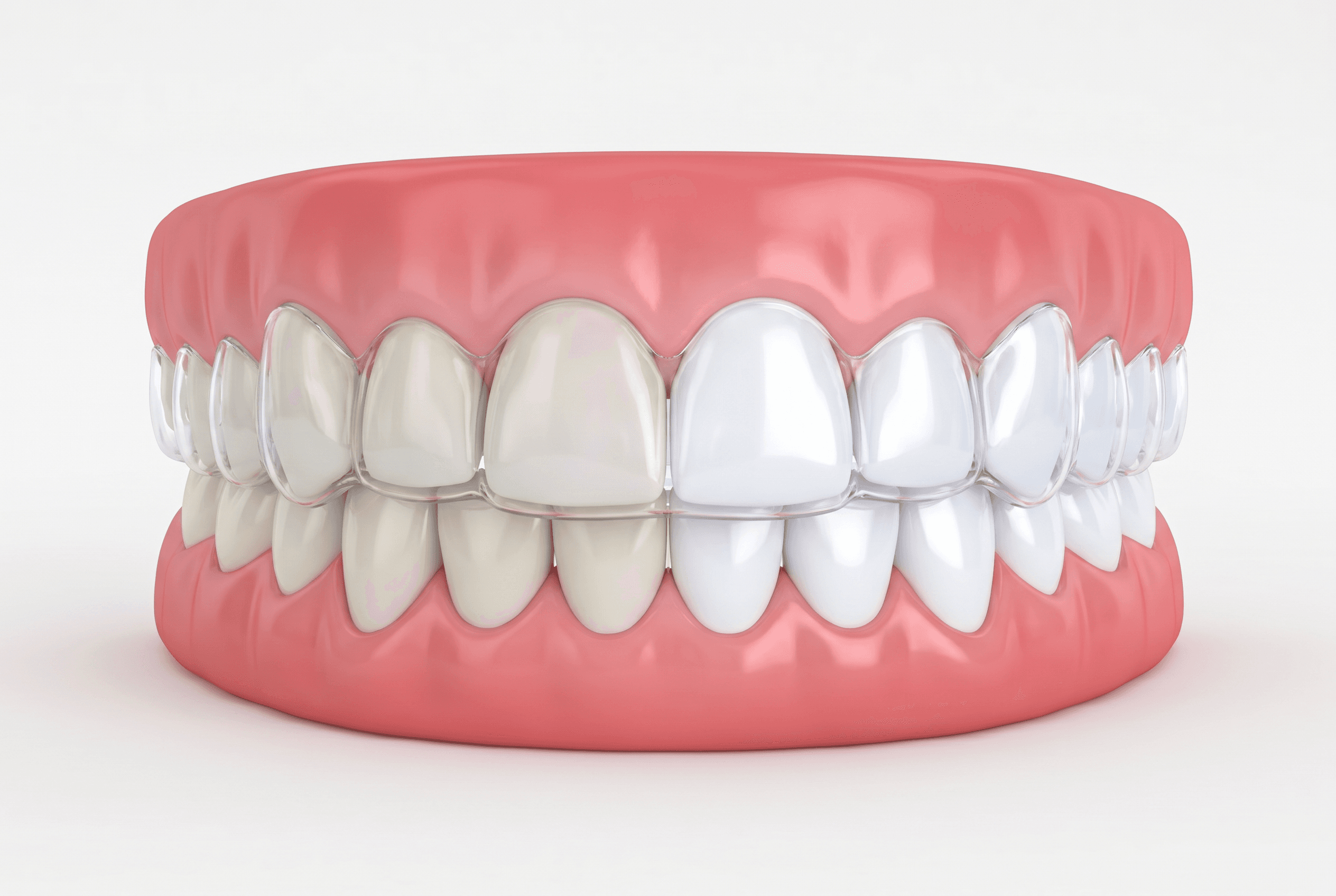
Teeth discolor for different reasons, and the reason determines which type of whitening will actually work. Extrinsic staining from coffee, tea, or wine responds quickly to surface bleaching agents. Intrinsic discoloration, the kind embedded in the dentin, resulting from aging, old restorations, tetracycline exposure, or fluorosis, requires a different approach. Most whitening products, including the higher-end over-the-counter options, do not adequately address intrinsic color. The problem with many whitening treatments is that they prioritize initial brightness without addressing tooth permeability — the capacity of the whitening agent to penetrate into the dentin where the deeper staining lives. Dehydration from in-office plasma lights creates an apparent whitening effect that partially reverses when the tooth rehydrates. High-concentration gel without preparation can cause sensitivity. We take a more deliberate approach. Before any bleaching begins, we use a medicated paste that strengthens the enamel and conditions the tooth for whitening, reducing sensitivity and improving the depth of penetration that follows. Our deep-bleaching protocol alternates in-office and supervised at-home phases, allowing the bleaching agent to work progressively without the discomfort associated with high-concentration single-session treatments. Deep bleaching is indicated for cases that other approaches cannot move: stubborn intrinsic staining, severe discoloration from tetracycline exposure or fluorosis, and patients who have tried other whitening methods with disappointing results. It achieves color change that single-session in-office treatment typically cannot match. We also screen for restorations and crowns in the smile zone before recommending whitening. Composite and ceramic do not bleach with the teeth. Any restorations matched to the pre-whitening shade will need replacement after treatment to match the new color. We discuss this upfront. Results are stable with a brief annual maintenance touch-up at home. We provide the protocol and the materials at the end of treatment.
Also in restorative dentistry
Related services
Composite Fillings
Tooth-colored composite restorations placed to halt decay and restore tooth function.
Onlays
Custom "partial crown" restorations that rebuild damaged cusps and protect the tooth while preserving healthy structure.
Direct Composite Veneers
Esthetic-focused composite veneers placed in a single visit. Conservative and reversible.
Porcelain Veneers
Custom-shaped porcelain shells that change a smile with minimal reduction of the underlying teeth.
Crowns & Bridges
Full-coverage restorations and multi-tooth bridges that restore function and protect the tooth.
Dentures & Partial Dentures
Full and partial removable prosthetics, including immediate dentures.